Ingredients, 7 min read
Testing and storing aquafeed raw materials to keep feed consistent
How fishmeal and plant meal variability reaches the finished feed, which tests to run on each lot, and how to store, monitor and reject feed ingredients.
A formulation is only as accurate as its ingredient values. If the fishmeal in the matrix is not the fishmeal in the silo, the pellet misses its targets however precise the solver.
The gap opens at two points: when a lot arrives with a different composition from the one assumed, and when a good lot deteriorates in storage. Both are manageable with a clear specification, a sampling routine, a small set of tests and a store that keeps ingredients cool, dry and moving.
Why ingredient variability becomes feed variability
Fishmeal is the clearest case. Feedipedia notes that fishmeal protein, ash, lipid and amino acid availability depend on the species processed, the share of whole fish versus by-products, raw material freshness and processing conditions. High ash can indicate more heads, frames and bones, while excessive drying heat can reduce amino acid availability. In its compiled analyses of a nominal 65% protein fishmeal, crude protein ranged from about 57 to 76% of dry matter and ash from about 7 to 34%.
Grade names are not fully standardized between origins and suppliers. Standard or fair average quality meal is often around 64 to 67% crude protein with more variation in freshness, ash and amines, while prime grades usually run about 68 to 72% with lower ash. Plant meals vary with crop, origin and processing, and carry a contamination risk covered below.
As an example, take a grower diet with 25% fishmeal, formulated on 68% crude protein and 16% ash. If the lot delivered is 64% protein and 22% ash, the diet loses 1.0 percentage point of protein (0.25 × 4) and gains 1.5 points of ash (0.25 × 6). FeedOptima's typical ranges cap ash at about 9 to 12% of diet for finfish grower feeds, so that jump uses a meaningful share of the limit.
Specifications, sampling and the tests that matter
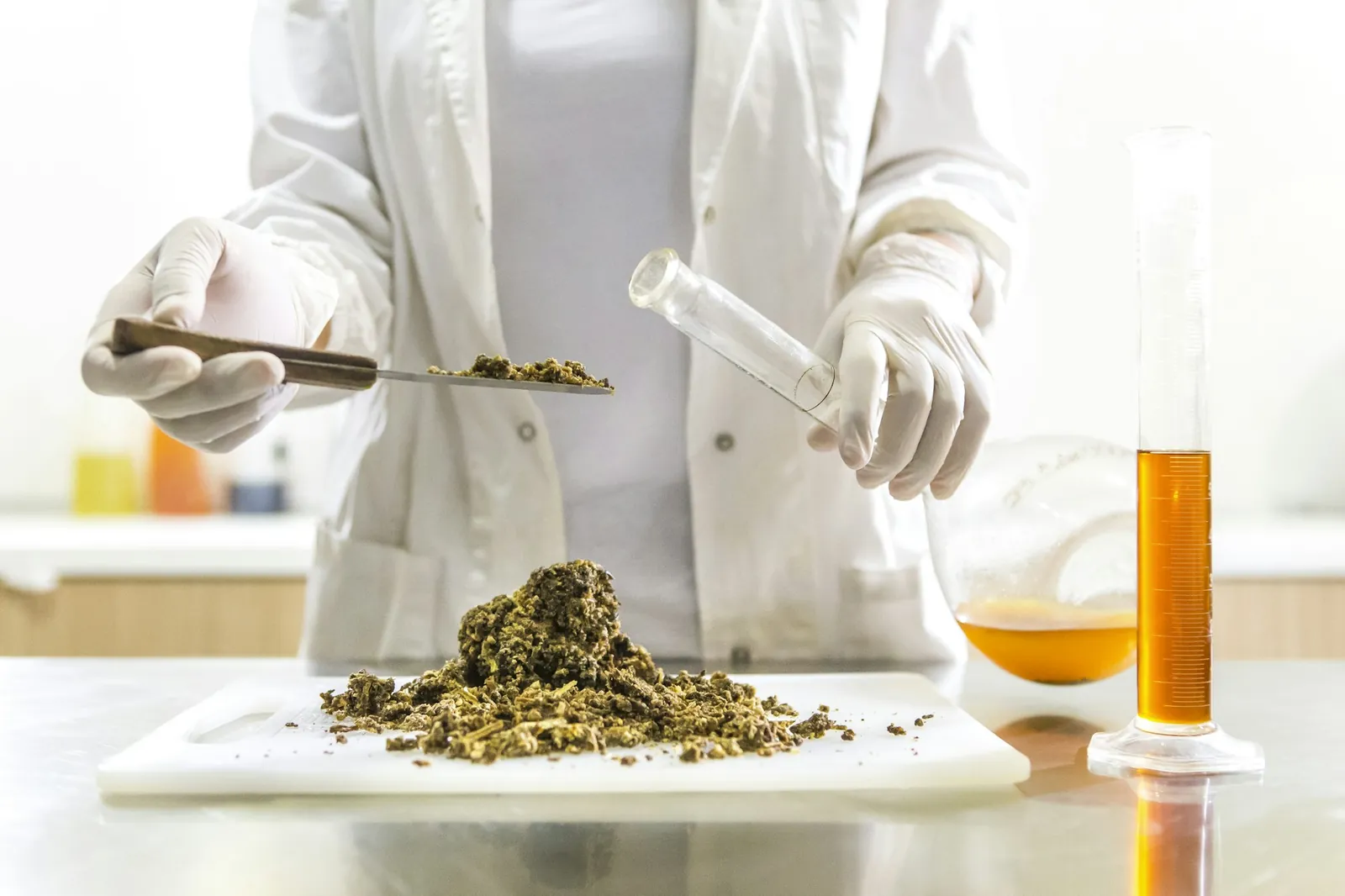
A specification turns expectations into a contract. FAO's fish feed technology manual describes raw material quality control as the check that minimum contract specifications are met, with the nutritionist, management and the quality control manager setting them together. For fishmeal, Feedipedia recommends buying on crude protein, ash, moisture, lipid, freshness indicators, digestibility and contaminant status. The certificate of analysis reports those values for the lot; your own sample confirms them.
Results are only as good as the sample. The same FAO manual recommends probing every bag in lots of up to 10 bags and 10% of bags in larger lots, taking 2 samples per tonne from bulk loads under 10 t, then pooling, mixing and quartering down to a 1 to 2 kg laboratory sample. Each delivery should also be checked for wetting, mould, insects and foreign material.
The core test set:
- Proximate analysis. Moisture, crude protein, lipid, crude fibre and ash are the baseline for every protein and energy ingredient.
- Near-infrared spectroscopy (NIR). NIR is fast, but it only predicts what it was calibrated against. In one study calibrated on more than 1,000 protein ingredient samples analyzed by official wet chemistry methods, NIR explained 85 to 98% of essential amino acid variance in most validations, with mean deviations below 5%.
- Amino acid analysis. Crude protein does not reliably predict lysine and methionine; the same study found NIR predicted amino acids in meat and poultry meals much better than regressions from crude protein.
Plant ingredients need a mycotoxin screen. In a global survey of aquaculture feeds, 98.7% of fish feed samples contained at least one mycotoxin, and deoxynivalenol (DON) was found in about 69% of wheat samples. The paper cites an EFSA no-observed-adverse-effect level of 0.6 mg DON/kg feed for carp, rainbow trout and salmon, against an EU guidance value of 5 mg/kg. In Canada, CFIA's RG-8 guidance lists mycotoxin levels for cattle, swine, poultry and other livestock classes but none for fish, so aquafeed producers need internal limits of their own.
For fishmeal, freshness is the main safety question. Feedipedia notes that histamine in the finished meal tracks raw material freshness closely; in one study, raw material at about 30 mg/100 g total volatile basic nitrogen (TVB-N) kept histamine below the 500 ppm limit the authors used. Put a histamine maximum on the specification alongside TVB-N, and test it rather than trusting the grade name.
Storage, oxidation and rancidity
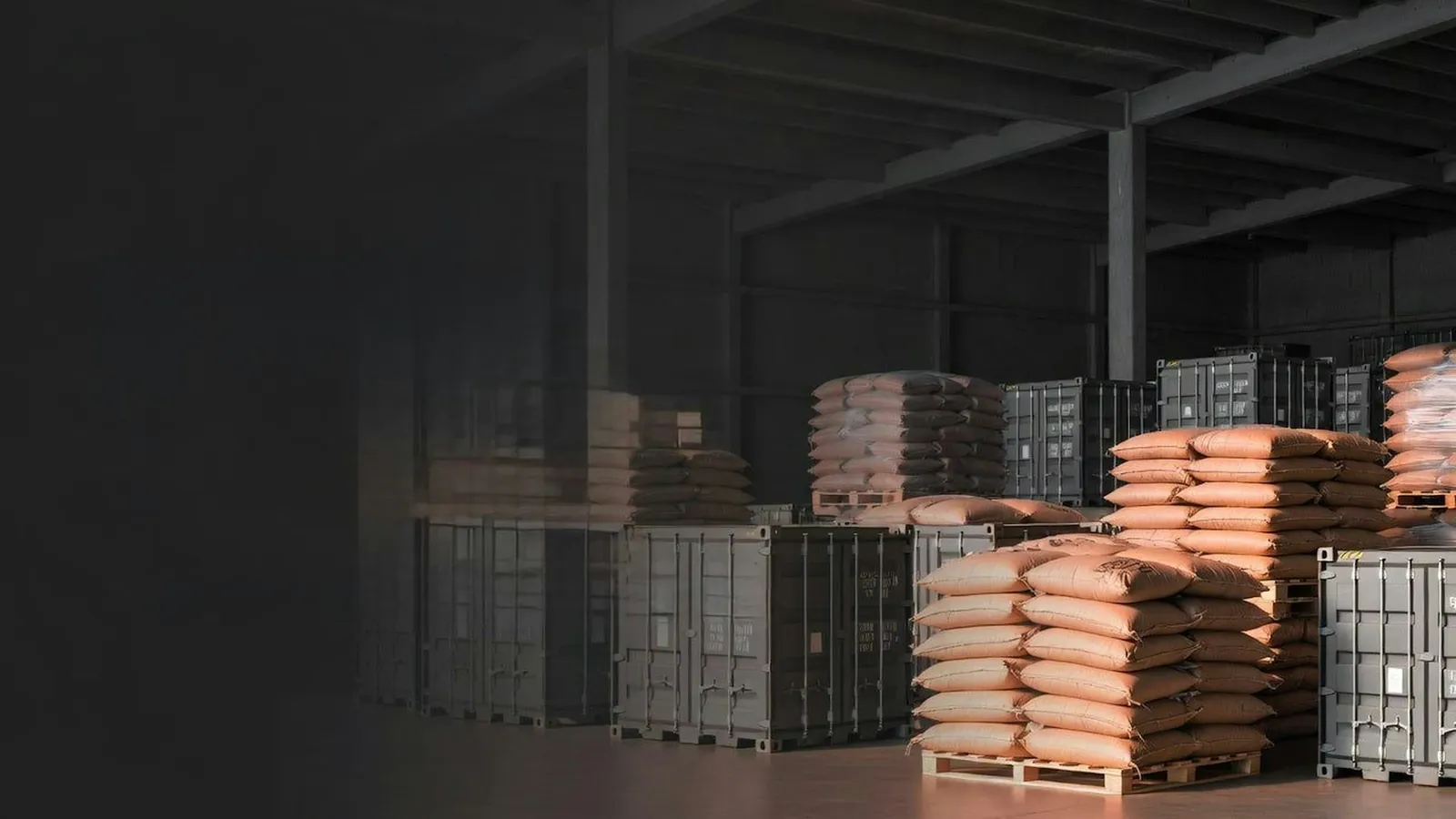
Storage decides whether a lot that passed on arrival is still in spec at the mixer. FAO's manual on feeding fish and shrimp targets 10% moisture or less, notes that fungi grow above about 65% relative humidity and generally above 15% moisture, and that insects thrive in ground materials and can reach epidemic numbers at 26 to 37 C. It advises pallets, a gap between stacks and walls, meshed entry points against birds and rodents, and small stacks, because large stacks generate heat.
Rotation is the cheapest control. New deliveries should never go in front of old stock, and the manual gives maximum holding times, shorter in warm stores:
| Material | Suggested maximum storage, temperate conditions |
|---|---|
| Ground ingredients | 3 months |
| Whole grain and oilcakes | 5 to 6 months |
| Compounded dry feeds | 1 to 2 months |
| Vitamin mixes, cool, air-tight and light-proof | 6 months |
Fish oil and high-fat meals are most exposed to rancidity because their long-chain polyunsaturated fatty acids oxidize readily. Feedipedia lists fatty raw material, poor stabilization, long storage, heat and oxygen as the risk factors, with antioxidant treatment and cool, dry storage as the defences. Antioxidants reduce oxidation but do not prevent it.
Peroxide value (PV) measures primary oxidation products, anisidine value (AV) measures secondary products such as aldehydes and ketones, and TOTOX combines them as 2 × PV + AV. PV captures only the early stage, so read AV alongside it. For reference, the omega-3 industry body GOED limits members' oils to PV below 5 meq O2/kg, AV below 20 and TOTOX below 26; feed-grade limits are set by contract, but trending these values lot by lot flags deteriorating oils.
When a batch is off spec
The response depends on what failed. A lot that misses on nutrients but is otherwise sound is a formulation problem: enter the measured values, re-run the formulation and let the solver shift inclusion rates. Price that change against the supplier's discount, because a lot that is cheaper per tonne can cost more per tonne of finished feed once corrected.
A lot that fails on safety is different. Mycotoxins above the internal limit, histamine above specification, high oxidation values, visible mould or live insects cannot be formulated away, and antioxidant added to an already oxidized oil does not reverse the damage. Reject or quarantine these lots, record the supplier and lot number, and keep the retained sample for any dispute.
Moisture sits between the two. A slightly wet lot may be usable if dried or used first, but FAO's quality control guidance treats any consignment above 13% moisture as prone to insect and mould attack and advises separating it from other stored ingredients.
In practice
- Write a specification sheet per ingredient: protein, ash, moisture and fat limits, plus histamine and TVB-N for fishmeal, PV and AV for oils, and mycotoxin limits for plant meals.
- Check every certificate of analysis against that sheet on the same basis, as fed or dry matter, before unloading.
- Sample by a fixed plan and retain a sealed 1 to 2 kg sample of each lot until the feed made from it has been used.
- Run NIR on every lot and send a fixed share to a wet chemistry laboratory, with amino acids when a supplier or origin changes.
- Screen cereal and oilseed lots for DON, including DON-3-glucoside and acetylated forms, and for aflatoxin B1, against limits set for fish.
- Log store temperature and relative humidity, keep sacks on pallets away from walls, date-label every lot and use the oldest first.
- Update the formulation matrix when a lot is outside spec on nutrients, and reject or quarantine any lot that fails on safety.
To check the protein, lipid, ash and energy targets your ingredient specifications need to support for a given species and stage, run an optimization with FeedOptima's free analysis.
Sources
- Fish meal, Feedipedia (INRAE, CIRAD, AFZ and FAO). https://www.feedipedia.org/node/208
- Quality control in fish feed manufacturing, in Fish Feed Technology, FAO. https://www.fao.org/4/x5738e/x5738e0r.htm
- Feed and Feeding of Fish and Shrimp, storage chapter, FAO. https://www.fao.org/4/s4314e/s4314e08.htm
- Near-infrared reflectance spectroscopy enables the fast and accurate prediction of the essential amino acid contents in soy, rapeseed meal, sunflower meal, peas, fishmeal, meat meal products, and poultry meal, Journal of Agricultural and Food Chemistry. https://pubmed.ncbi.nlm.nih.gov/11170560/
- Multi-mycotoxin contamination of aquaculture feed: a global survey, Toxins. https://pmc.ncbi.nlm.nih.gov/articles/PMC11946512/
- Fish oil supplements, oxidative status, and compliance behaviour: regulatory challenges and opportunities, PLoS One. https://pmc.ncbi.nlm.nih.gov/articles/PMC7774961/
- RG-8 Regulatory guidance: contaminants in feed, Canadian Food Inspection Agency. https://inspection.canada.ca/en/animal-health/livestock-feeds/regulatory-guidance/rg-8