Nutrition, 7 min read
Omega-3 in aquafeeds and the practical alternatives to fish oil
How EPA and DHA needs differ between freshwater and marine fish, how algal, GM oilseed and by-product oils compare, and how to protect and finish with them.
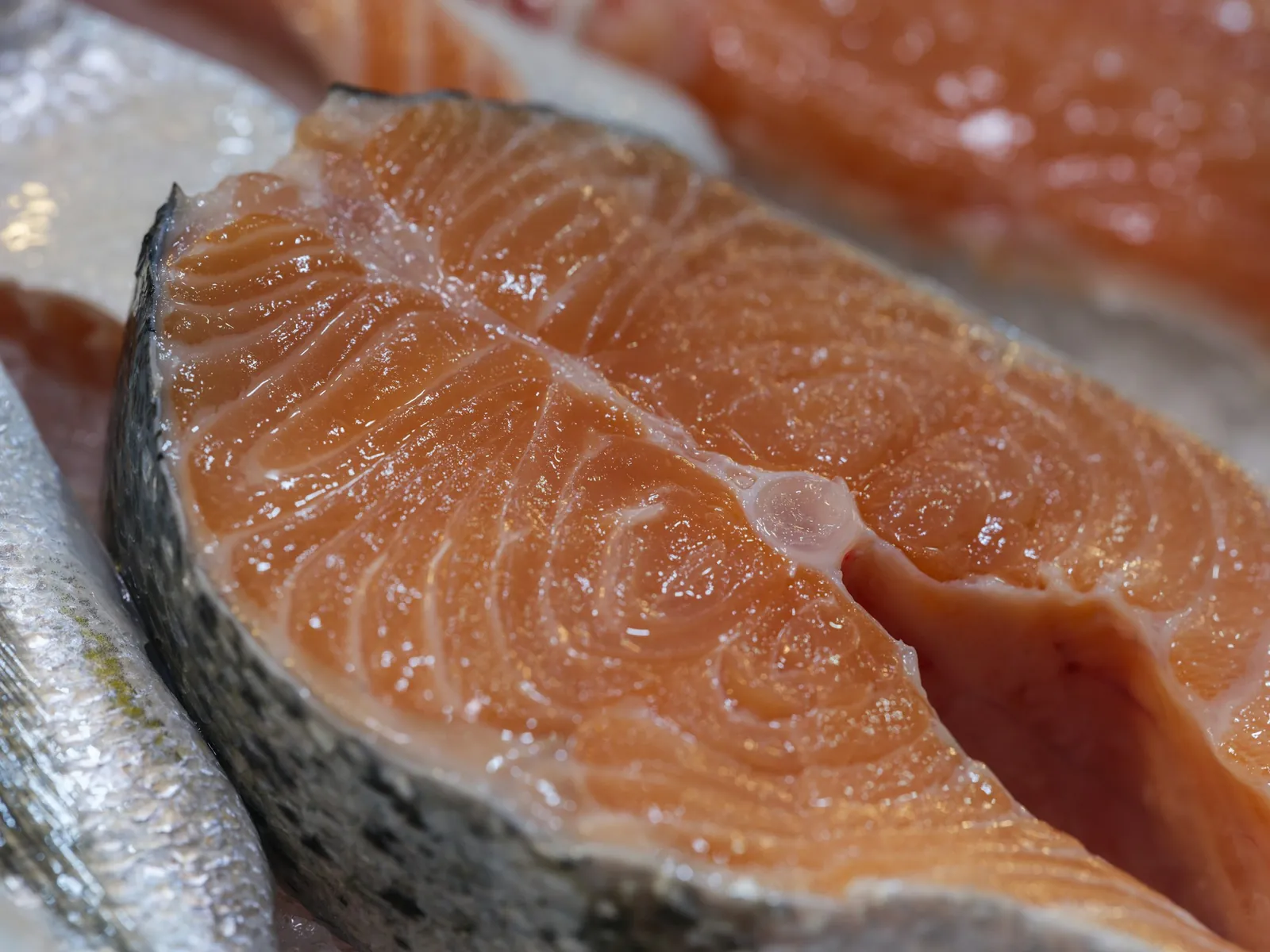
Fish oil is the traditional source of EPA and DHA in salmonid and marine fish diets, and its supply and price sit outside any feed mill's control. Every tonne replaced with plant oil also changes the fatty acid profile of the fillet that reaches the customer.
The job has three parts: meet the species requirement for long-chain omega-3 at the lowest workable cost, keep those oils from oxidizing before the fish eat them, and decide whether fillet omega-3 is worth paying for at harvest. Each decision needs numbers in g/kg or % of diet, not a fish oil inclusion rate.
Why marine fish need preformed EPA and DHA
EPA (20:5n-3) and DHA (22:6n-3) are essential long-chain omega-3 fatty acids for fish. A fish can build them from alpha-linolenic acid (ALA, 18:3n-3) only if it carries the right desaturase and elongase enzymes. Freshwater species and salmonids express the full set, while marine carnivorous species appear to lack two key steps, a delta-5 desaturase and the Elovl2 elongase, which leaves the diet as their only reliable supply.
Having the enzymes does not mean using them well. Atlantic salmon, like humans, convert ALA to EPA and DHA inefficiently, so salmonid specifications still carry an EPA plus DHA minimum. FeedOptima's reference data use these typical minimums on the whole diet:
- Atlantic salmon: at least 10 g/kg (1% of diet) throughout the seawater phase.
- Rainbow trout, European sea bass: at least 1% of diet.
- Gilthead sea bream: at least 1.0%, with DHA at least 0.6%.
- Barramundi: at least 1.5 to 2.0%, with an omega-3 to omega-6 ratio of about 1.5 to 1.8.
- Whiteleg shrimp: at least 0.5%, about 1% in post-larval and juvenile feeds.
- Common carp: expressed as C18 fatty acids, linoleic acid at least 1.0% and linolenic acid 0.5 to 1.0%.
These are floors for growth and health. A fillet omega-3 target is a separate decision, handled through finishing.
Fish oil supply and the fillet trade-off
Fish oil is a small and largely fixed pool. While fed aquaculture production more than doubled, the fish oil it used stayed roughly flat at around 800,000 tonnes a year, with salmonids the largest user at about 60%, and climatic events such as El Niño move both supply and price.
Feed makers responded by blending in oilseed oils, which are rich in omega-6 and contain no EPA or DHA. Growth and health held up, but flesh fatty acids track the diet almost exactly, with correlation coefficients of 0.99 to 1.00 in one Atlantic salmon trial. A survey of more than 3,000 farmed Scottish salmon found that EPA plus DHA per 100 g of flesh roughly halved over the period studied, so a consumer needed two 130 g portions instead of one to reach the same weekly intake.
Comparing the alternative oil sources
The alternatives differ in which long-chain fatty acid they supply and how much exists. The table shows example compositions reported with that Scottish survey, in % of total lipid; lots vary, so treat them as illustrations.
| Oil | ALA | EPA | DHA |
|---|---|---|---|
| Rapeseed | 8.3 | none | none |
| Linseed | 55.5 | none | none |
| Fish oil, South American (anchovy type) | 0.9 | 18.8 | 12.4 |
| Fish oil, northern hemisphere (herring type) | 1.1 | 8.4 | 8.7 |
| Schizochytrium algal oil, DHA-rich | 0.2 | 0.8 | 44.0 |
| Schizochytrium algal oil, EPA and DHA | 0.1 | 16.5 | 27.1 |
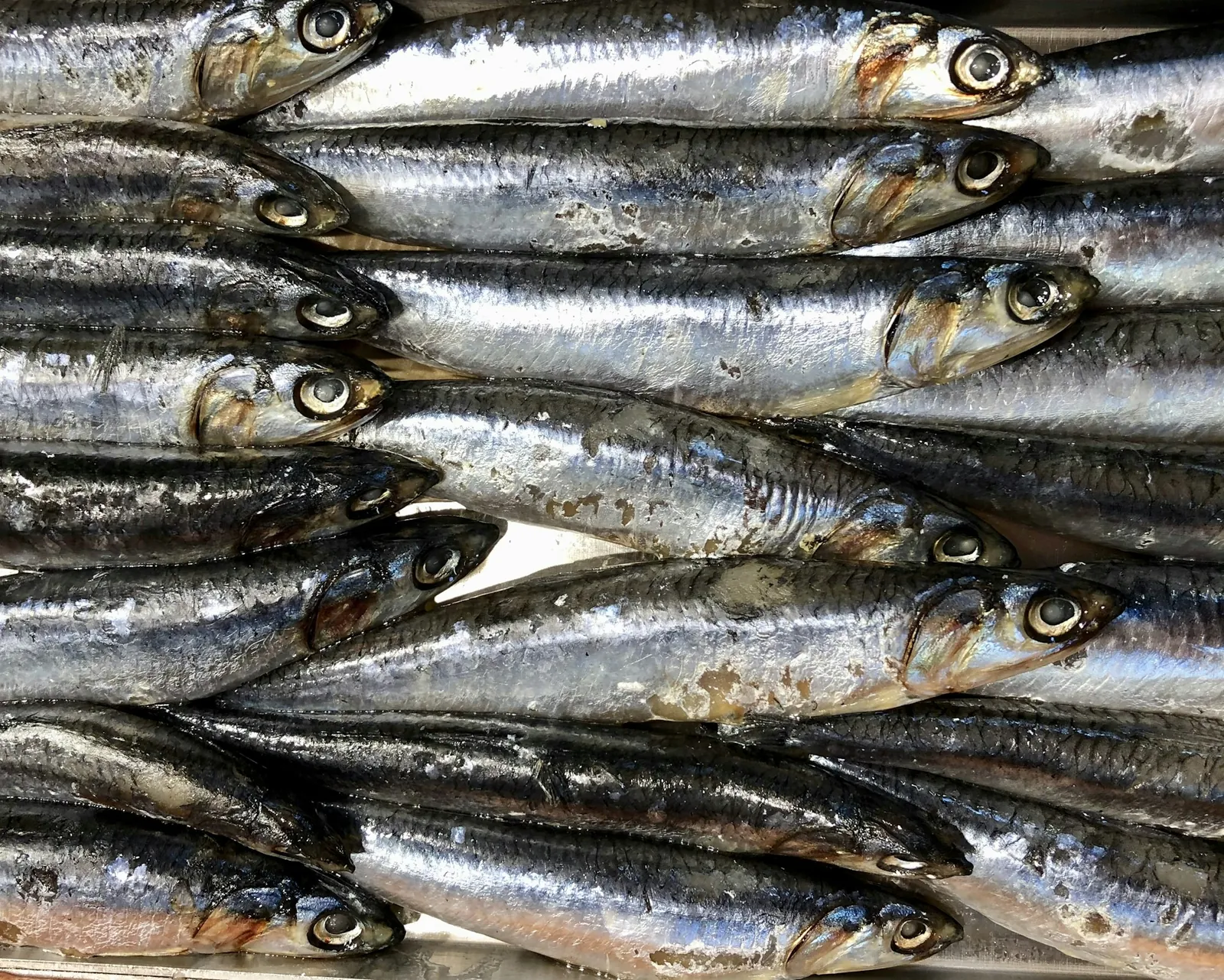
The two fish oils differ close to twofold in EPA plus DHA, which is why a fish oil inclusion rate says little about the diet. Schizochytrium microalgae are grown by fermentation, so their oil does not depend on a fishing season; depending on strain it is DHA-rich with almost no EPA, or supplies both. The survey authors describe these oils as lower in volume and considerably more expensive than fish oil, which favours using them to close a specific gap rather than as bulk lipid.
Oilseeds engineered with microalgal genes yield oil with up to about 20% of fatty acids as long-chain omega-3. In an Atlantic salmon trial, a transgenic camelina oil diet carried over 17% long-chain omega-3 in its fatty acids against around 6% in the fish oil control; growth did not differ, and a 130 g fillet portion held about 931 mg of long-chain omega-3 against 587 mg. A DHA-producing canola oil gave the same growth and about the same whole-body EPA plus DHA as fish oil in salmon fingerlings at 12 C and 16 C. The constraint is commercial more than nutritional, since acceptance of GM-derived ingredients differs between markets.
Krill and copepod oils are further options, but volumes are expected to be low and harvesting lower in the food web raises concern. By-product oils already matter: IFFO reports that by-products supply more than half of global fish oil, with farmed salmon trimmings and pangasius off-cuts the largest sources. Since flesh follows diet, oil from farmed fish trimmings can differ sharply from anchovy or herring oil and needs the same lot-by-lot testing.
Oxidation, antioxidants and storage
The double bonds that make EPA and DHA valuable also make them easy to oxidize. Fats, fat-soluble vitamins and xanthophyll pigments such as astaxanthin are most at risk, and surface area, air and trace iron and copper speed the process. Reported effects of oxidized feed include lower weight gain, poorer feed conversion, higher disease susceptibility and higher mortality.
Antioxidant is consumed during pelleting and extrusion and keeps depleting in storage, faster when warm. Protection is best when it goes in both before cooking and as a top dressing after the cooler, with a margin for storage and transport. Natural tocopherols need several times the concentration of synthetics such as ethoxyquin, BHA, BHT or TBHQ for a similar effect, so confirm which options each target market permits.
Vitamin E, the fish's own antioxidant, needs to rise with dietary PUFA. FeedOptima's typical ranges put it at least 150 mg/kg for Atlantic salmon, 150 to 250 mg/kg in high-lipid trout grower and finisher feeds, and 100 to 200 mg/kg for gilthead sea bream on high-lipid or plant-oil diets.
Finishing diets before harvest
A finishing diet moves the omega-3 budget to the end of the cycle: fish grow on a plant-rich diet for most of the ongrowing period, then switch to a fish oil diet in the final weeks before harvest. It saves marine oil while fish only need the minimum, and spends it where it reaches the fillet.
The recovery is partial and slow. In a long Atlantic salmon trial, fish fed 100% vegetable oil for 50 weeks and then 100% fish oil for 20 weeks reached about 80% of the flesh EPA and DHA of fish fed fish oil throughout, and their linoleic acid stayed about 50% higher. The same trial showed how fast values fall: replacing 33% of the oil with vegetable oil cut flesh EPA and DHA to about 70 and 75% of fish oil values.
Because flesh lipid tracks the diet, the shift depends on how much new lipid the fish lay down during finishing, so plan it in months and expected weight gain rather than as a short top-up. High EPA and DHA algal or GM oilseed oils can fill the same role without more fish oil.
In practice
- Specify EPA plus DHA in g/kg or % of diet and let the solver choose the oils, instead of fixing a fish oil inclusion rate.
- Require a fatty acid profile with every fish oil, by-product oil and algal oil delivery, and update the ingredient matrix before formulating.
- Check each diet against the species and stage minimum, such as 10 g/kg EPA plus DHA for seawater Atlantic salmon.
- Raise vitamin E with lipid and PUFA content, and confirm the level in finished feed by analysis.
- Dose antioxidant before extrusion and again after coating or cooling, sized to the expected storage and transport time.
- Store oils and feed cool, closed and away from heat and air, and use the oldest lots first.
- If fillet omega-3 is a sales specification, plan finishing in months, test fillet fatty acids before the switch and at harvest, and adjust the next cycle.
To see the lipid range and, where listed, the EPA and DHA target for your species and stage, run an optimization with FeedOptima's free analysis.
Sources
- Impact of sustainable feeds on omega-3 long-chain fatty acid levels in farmed Atlantic salmon, Scientific Reports. https://pmc.ncbi.nlm.nih.gov/articles/PMC4761991/
- Comparison of activities of fatty acyl desaturases and elongases among six teleosts with different feeding and ecological habits, Frontiers in Marine Science. https://www.frontiersin.org/journals/marine-science/articles/10.3389/fmars.2020.00117/full
- An oil containing EPA and DHA from transgenic Camelina sativa to replace marine fish oil in feeds for Atlantic salmon, PLOS ONE. https://journals.plos.org/plosone/article?id=10.1371/journal.pone.0175415
- n-3 Canola oil effectively replaces fish oil as a new safe dietary source of DHA in feed for juvenile Atlantic salmon, British Journal of Nutrition. https://pubmed.ncbi.nlm.nih.gov/31506120/
- Altered fatty acid compositions in Atlantic salmon fed diets containing linseed and rapeseed oils can be partially restored by a subsequent fish oil finishing diet, Journal of Nutrition. https://pubmed.ncbi.nlm.nih.gov/12949367/
- Antioxidants manage effects of oxidation on feeds, feed ingredients, Global Seafood Alliance Responsible Seafood Advocate. https://www.globalseafood.org/advocate/antioxidants-manage-effects-of-oxidation-on-feeds-feed-ingredients/
- Update on by-product marine ingredients, IFFO. https://www.iffo.com/by-product